How IFS Cloud 25R1 Delivers Business Value via AI
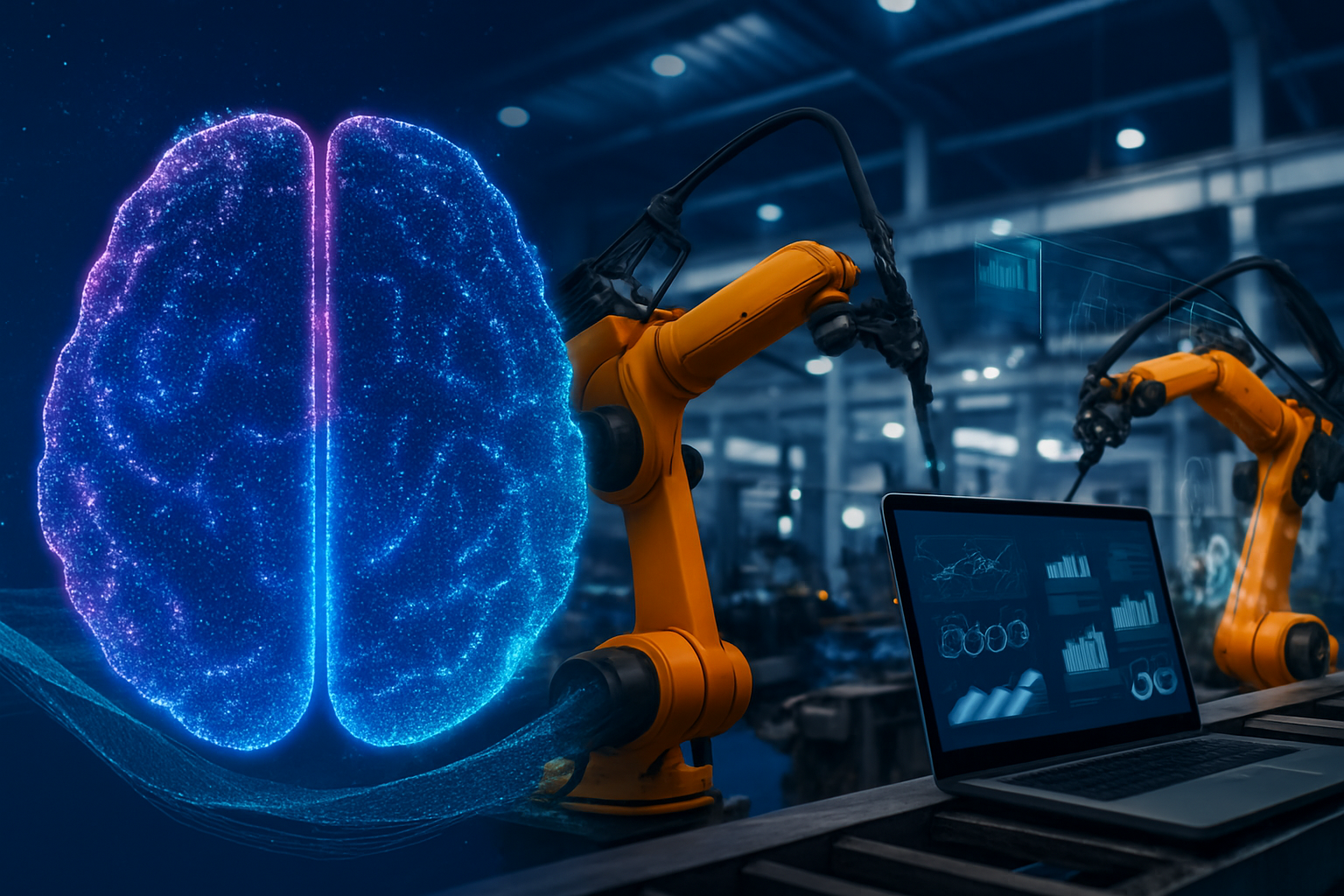
Industrial organizations have long recognized AI’s potential. The challenge has been moving from experiments at the edge of operations to measurable outcomes at the core. With the release of IFS Cloud 25R1, AI is no longer an add-on, it is an embedded engine of value creation.
At Jumpmodel, we see 25R1 not just as another upgrade, but as a step change in how asset intensive companies can compete. The difference lies in specificity: targeted capabilities that reduce downtime, accelerate planning, and align sustainability with profitability. Two innovations illustrate this shift particularly well.
1. Operation Time Prediction: Smarter, More Reliable Production Planning
Manufacturers face a consistent dilemma: production schedules often diverge from reality, creating delivery slippage, excess costs, and hidden inefficiencies.
Operation Time Prediction in IFS Cloud 25R1 directly addresses this gap. By applying machine learning models trained on actual operational data, the system predicts how long production activities will take under real conditions not theoretical standards.
The business impact is significant:
- Delivery performance improves as schedules reflect actual capacity.
- Bottlenecks become visible earlier, allowing managers to resolve them before they cascade.
- Cost structures tighten, since systemic inefficiencies (e.g., consistent overruns on specific machine lines) are exposed and corrected.
In short, planning becomes more resilient because it is based on truth, not assumption. For manufacturers under pressure from volatile supply chains, this is not incremental it is transformative.
2. AI Copilot for FMECA: Redefining Reliability Engineering
Unplanned downtime remains one of the most expensive risks for asset-intensive enterprises. Traditionally, Failure Modes, Effects, and Criticality Analysis (FMECA) has been a manual, resource-intensive exercise, often conducted after problems emerge.
The new AI Copilot for FMECA changes the equation. It continuously ingests fault and maintenance data, transforming raw inputs into prioritized insights. Instead of engineers combing through data reactively, the system proactively highlights where the next critical failure is most likely to occur—and what actions will prevent it.
The operational value is clear:
- Reliability engineers target the right issues first, reducing downtime exposure.
- Maintenance spend decreases, as inspections and part replacements are aligned to actual risk.
- Asset life extends, creating compounding returns across the capital base.
As one engineer at Noble Drilling noted, the difference is between “spending 10 hours every five years to change a part, versus one hour every day inspecting it.” AI removes unnecessary work from the queue freeing both people and assets to perform at their best.
Why These Capabilities Matter Now
Industrial leaders are operating in an environment of tightening margins, escalating stakeholder expectations, and rapid market shifts. Incremental efficiency gains are no longer enough. What is required are bold, data-driven interventions that structurally improve performance.
IFS Cloud 25R1 provides exactly that: embedded intelligence that translates directly into operational, financial, and sustainability outcomes. Organizations adopting these tools aren’t just deploying AI; they are creating a foundation for resilient, autonomous, and profitable growth.
Looking Ahead: From Predictive to Agentic AI
While Operation Time Prediction and Copilot for FMECA deliver immediate impact, they also signal the trajectory of IFS Cloud: toward agentic AI—systems that can reason, decide, and act in context. With the IFS Nexus Black innovation program accelerating co-creation of next-generation AI solutions, customers are already shaping what industrial intelligence will look like in the years ahead.
Conclusion
For executives weighing technology investments, the message is clear: AI in IFS Cloud 25R1 is not about potential, it is about production. By embedding capabilities like Operation Time Prediction and Copilot for FMECA directly into workflows, IFS has moved AI from ambition to execution.
At Jumpmodel, we believe this release represents a critical inflection point. Industrial leaders who embrace it will not just optimize operations; they will redefine the boundaries of speed, reliability, and sustainable profitability in their sectors.