Modernization by Design: Why Enterprises Need Clarity, Not Mandates, to Evolve Their ERP Landscape
Digital modernization is supposed to accelerate enterprise transformation. Yet today, many organizations find themselves overwhelmed, uncertain, and unable to realize the value promised by large scale ERP initiatives.
One of the most fundamental prerequisites of modernization is clarity. And for many enterprises, that clarity is missing. The result is a layer of complexity that quickly becomes a barrier to innovation, efficiency, and long-term evolution.
Recent findings from CIO.com shed light on what customers especially SAP customers are experiencing in today’s modernization landscape:
- 95% say making an ROI case for S/4HANA is difficult or requires significant effort.
- 90% express concerns about unpredictable subscription pricing.
- Almost 50% do not expect to be running S/4HANA in the cloud five years from now.
These insights speak to a deeper reality: digital modernization has not just lost momentum, it’s lost meaning.
When Migration Replaces Modernization
Over the last decade, modernization efforts across enterprises have shifted toward system replacement. The industry narrative changed: migrate first, transform later.
The result?
- Programs exhaust time, budget, and stakeholder stamina.
- “Transformation” becomes a distant promise rather than a measurable outcome.
- Organizations are left with modernized software, but not modernized operations.
True modernization is not defined by a system boundary, nor is it tied to a forced migration timeline.
It does not require organizations to abandon operational knowledge that took decades to build.
At JumpModel, and in the way we work with global enterprises, modernization is framed differently:
Modernization is continuous evolution designed around your business, your data, and your long-term operating model.
We use our cross platform technology expertise to connect data, processes, and applications so enterprises can make smarter decisions and increase the odds of success regardless of their ERP landscape.
Modernization should be about realizing benefits, not fighting the friction created by transformation programs.
From Migration Fatigue to Transformation Freedom
Every enterprise has unique processes, customizations, and operational realities that no generic upgrade path can erase. Asking organizations to abandon these foundations in pursuit of a “clean slate” is neither realistic nor necessary.
IFS takes a fundamentally different approach.
1. Strengthen What Already Works
We begin by understanding your operational landscape not replacing it.
We map current processes, identify gaps, and reinforce areas that deliver the most value.
2. Layer Intelligence Where It Matters
Through automation, analytics, and AI, we enhance not disrupt the workflows that keep the business running.
3. Prepare the Structure for the Future
Modernization is done intentionally, without operational shock, and with design principles that build resilience, agility, and long-term control.
Modernization Pillars: Data, Architecture, and AI
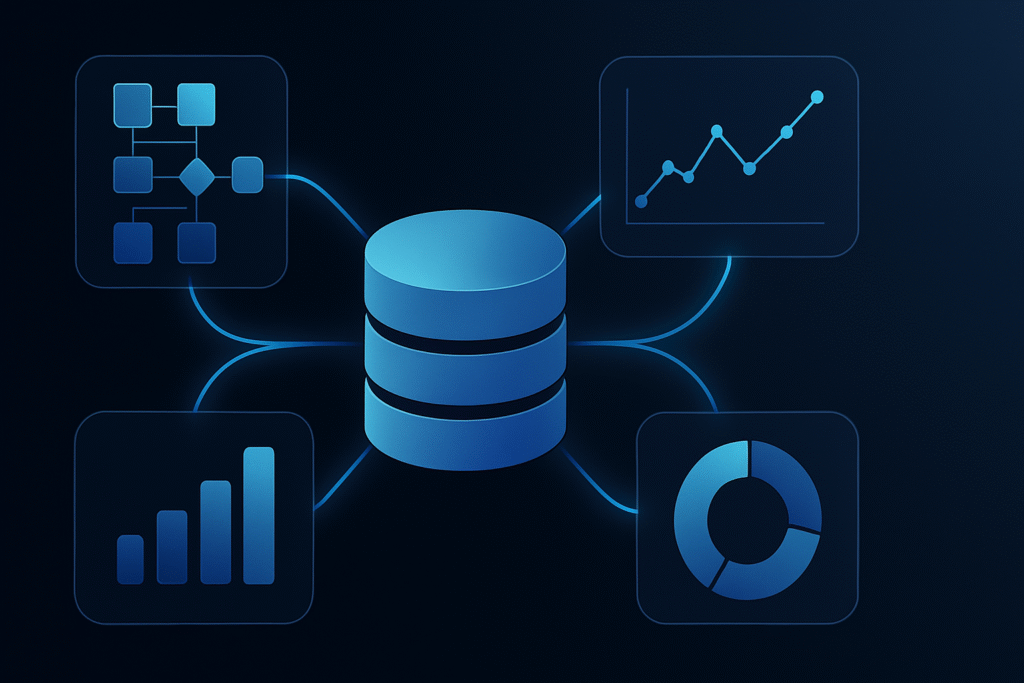
Data centric modernization begins with unifying fragmented systems, enabling analytics, AI, and operational decision making to work from a single source of truth.
Data Centricity & Convergence
Modernization starts with data.
Automated extraction, cleansing, and transformation create a unified foundation that powers:
- analytics
- AI
- operational decision-making
- cross-system visibility
A strong data foundation is the backbone of any successful modernization effort.
Composable Architecture
IFS Cloud brings ERP, EAM, and Service Management together in a unified, modular platform.
You adopt only what provides value now.
You expand when needed.
You evolve without disruption.
This composability reflects how modern enterprises want to operate.
Industrial AI That Drives Outcomes
IFS embeds AI directly into operational data streams—meaning:
- AI predicts
- AI recommends
- AI orchestrates
This is not “adjacent AI.”
It’s AI that understands the mechanics of day-to-day operations.
Modernization That Reflects How Enterprises Actually Operate
Another insight from CIO.com reveals that nearly 80% of SAP customers expect their future ERP strategy to be modular, involving multiple vendors.
This is exactly the world IFS is built for.
Enterprises no longer want to choose between one massive upgrade or doing nothing.
They want:
- flexibility
- optionality
- control
- the ability to put their strategy before the system
IFS offers all of these whether an organization wants to:
- stabilize their SAP core,
- augment SAP with IFS capabilities (asset management, service operations, planning, maintenance, etc.), or
- transition entirely to a leaner, industry-focused ERP that accelerates ROI.
Whatever the choice, IFS provides a data first, risk reduced modernization framework that delivers measurable value faster.
Modernization by Design, Not by Mandate
Modernization should feel natural, not like an obligation.
It should unlock agility, resilience, and control.
It should create a digital backbone that connects people, assets, and operations with intelligence at the center.
IFS gives organizations a platform to orchestrate performance, not just manage it.
That is modernization by design.